Saskatchewan now has lithium reserves on the books.
On October 13, Calgary-based Grounded Lithium released the pre-feasibility study for its Kindersley Lithium Project in west-central Saskatchewan. The study, authored by Stantec, declares 82,499 tonnes of lithium carbonate equivalent in Mineral Reserves. According to the company, these are the first NI 43-101 compliant lithium reserves publicly declared anywhere in the province.
That is a technical milestone with real commercial weight. Resources describe what might be there. Reserves describe what a qualified engineering study says can be economically produced.
From Resource Story to Reserve Base
Canadian brine lithium has spent years building resource estimates. Moving into reserves requires a defined development plan, a selected process route, cost estimates and a production schedule that all hold together.
The Kindersley study supplies that plan for a first phase of development. Grounded Lithium reports about 1.0 million tonnes of LCE in combined Mineral Reserves and Measured and Indicated Resources.
Those reserves and resources sit on just 36 sections, roughly 13% of the project’s total land area.
That ratio matters. The first phase uses only a small slice of the acreage, which leaves considerable room for later phases if drilling continues to confirm the reservoir.
An Oilfield Style Development Plan
The flowsheet looks familiar to anyone who has worked in western Canadian oil and gas.
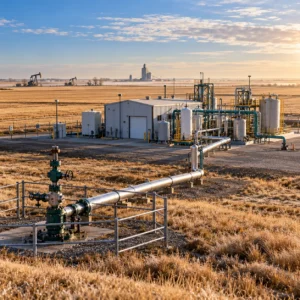
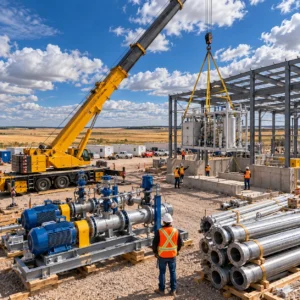
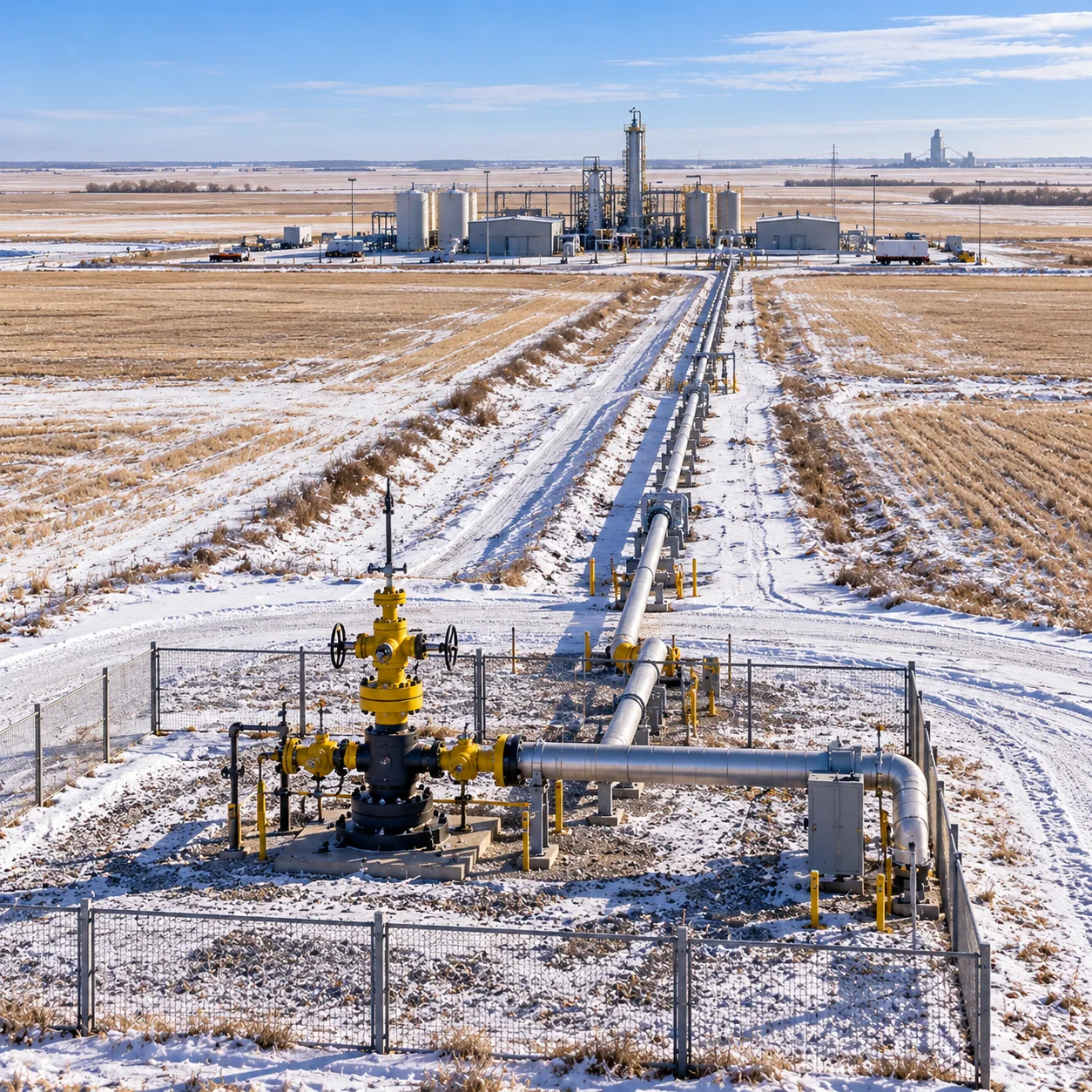
The PFS calls for 45 production wells in the Duperow formation, delivering about 30,000 cubic metres of brine per day through roughly 46.6 kilometres of buried gathering pipeline to a central processing facility. Brine grades range from 70 to 81 milligrams of lithium per litre, with an original average of 73.8 milligrams per litre.
Depleted brine goes back underground. Eight injection wells return it to the Duperow for pressure management, and three disposal wells can send brine to the deeper Deadwood formation if injection pressures need relief.
Pipelines, pressure maintenance and produced fluid handling are skills the region already has in depth. That gives Saskatchewan brine projects a practical advantage over greenfield lithium districts elsewhere.
Adsorption DLE Gets the Nod
After evaluating several technologies, the study selected an adsorption-based direct lithium extraction system.
Grounded Lithium cites three reasons: no neutralizing reagents, less filtration and solids disposal, and a higher quality eluate. The processing chain runs from brine pretreatment through DLE to a lithium chloride eluate, then concentration by reverse osmosis and ion exchange, carbonation to lithium carbonate, washing, drying and packaging.
The study assumes 87% lithium process recovery. Average production comes to about 3,200 tonnes per year of LCE, at an average operating cost of C$8,581 per tonne.
The project carries a capital estimate of C$603.1 million, an NPV at an 8% discount rate of C$125.0 million and an IRR of 10.8%. The capital figure is a Class 4 estimate, which is typical for this stage of study.
A Clear List of Levers to Improve the Numbers
The first-phase case is deliberately conservative, and the company has laid out how it intends to build on it.
Gregg Smith, President and CEO of Grounded Lithium, said “the PFS represents more than just a major milestone,” adding that it provides a clear path to enhance project economics through further delineation of the reservoir.
The company has identified several next steps:
- File the NI 43-101 technical report on SEDAR+ within 45 days of the release
- Drill to convert Inferred resources to Indicated or Measured categories
- Use that drilling to support higher well output and larger reserves
- Continue evaluating DLE technologies, with detailed engineering and cost work
- Consider a field pilot to confirm process performance on Kindersley brine
Each of those steps addresses a specific variable in the model, from well deliverability to recovery rates. That is the kind of targeted de-risking that tends to move projects forward.
A Partner With Metallurgical Depth
Grounded Lithium describes the PFS as the first major de-risking step achieved with its project partner, Denison Mines.
Under their agreement, Denison can earn up to a 75% working interest by funding up to C$15.15 million in total, made up of up to C$3.15 million in cash payments to Grounded Lithium and up to C$12 million in project spending. The company says Denison also brings metallurgical expertise and a disciplined approach to de-risking.
For a junior developer, a partner that funds work programs and contributes processing know-how is a meaningful advantage when moving from study to pilot.
What It Means for Canadian Brine
Saskatchewan has been building momentum in brine lithium, with several projects advancing pilots and approvals. Kindersley adds something the province did not have before: a formally declared reserve, prepared to Canadian disclosure standards by an independent engineering firm.
That gives investors, governments and potential offtakers a reference point. It shows the Duperow can be modelled, engineered and costed to reserve standard using DLE.
Resources start the conversation. Reserves let the province’s brine lithium sector be underwritten.