Alberta brine is starting to carry two products at once.
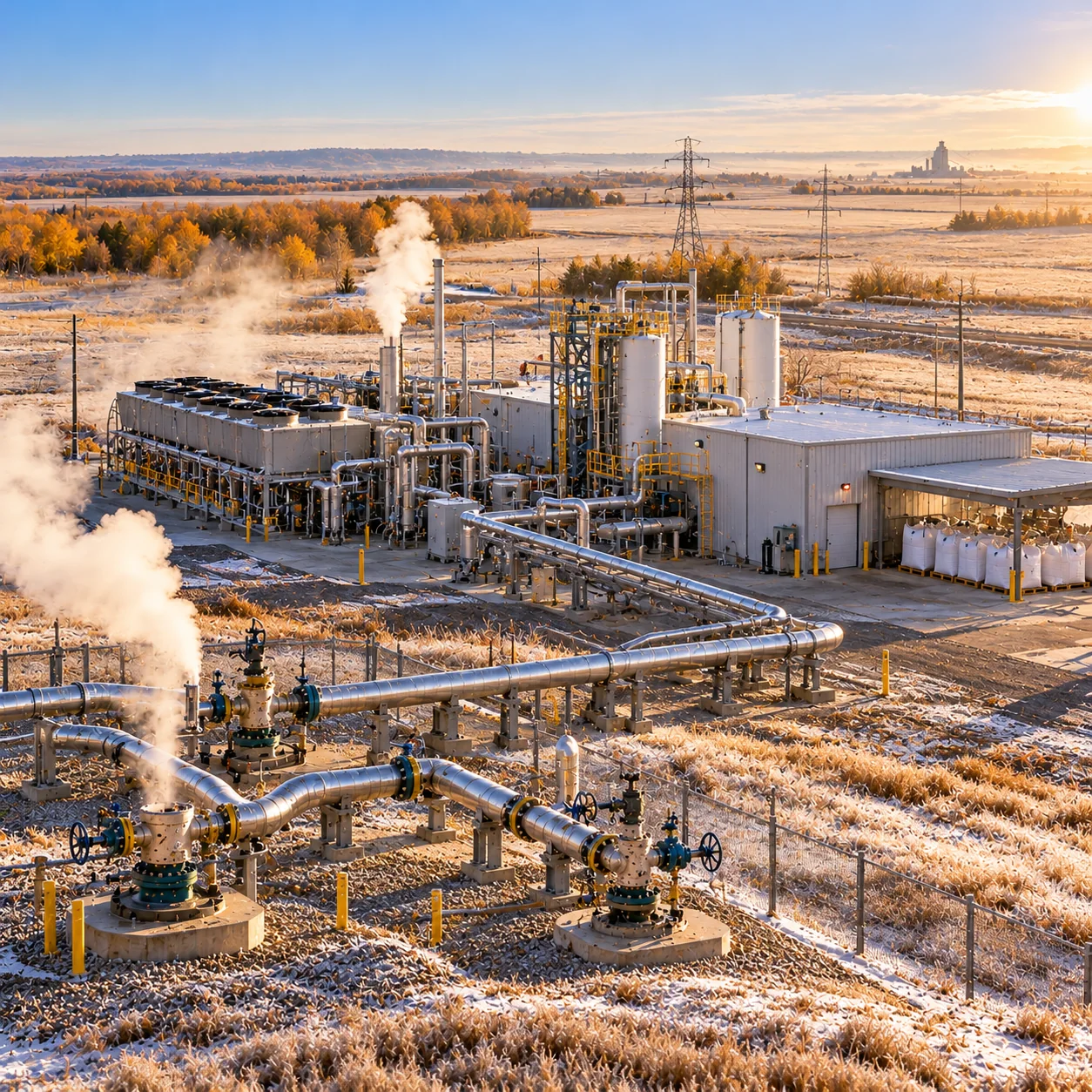
On October 13, 2026, Danish developer Lithium Harvest Holding A/S said it had signed a letter of intent to form a joint venture with a geothermal development partner for an integrated geothermal power and lithium facility in Alberta. The plan uses the heat in deep formation water to generate electricity and the same brine as feedstock for lithium extraction and refining.
At full nameplate capacity, the company targets about 28,500 tonnes of lithium carbonate and 0.67 TWh of renewable electricity a year, with first power and first lithium carbonate both targeted for 2028. Chairman Sune Mathiesen said that once completed, it “will be one of the largest facilities of its kind in the world.”
The announcement is an LOI, not a final investment decision. Even so, it brings a new business model into the Canadian brine conversation, and it lands in a province that has spent the past few years building the rules to support it.
Two Revenue Streams From One Well Pad
Most Canadian direct lithium extraction projects are judged on a single question: can lithium be pulled from dilute brine at a cost that works? Lithium Harvest is asking a slightly different one.
Under the plan described in its release, the geothermal partner contributes geothermal development capability, while Lithium Harvest supplies its brine to battery grade lithium platform, which covers water treatment, its proprietary DLE technology and refining. The company describes its geothermal extraction step as sitting between production and reinjection, so lithium recovery is designed to run without cutting into power output.
That matters for project economics.
Pumping, heating and reinjecting large volumes of brine is the heaviest fixed cost in any brine operation. When the same flow also drives turbines, the cost of moving water is shared across two products. Electricity sales offer a second revenue line, and on site power reduces exposure to grid prices for an energy hungry chemical process.
Why Alberta Fits the Model
Alberta brings two things a geothermal lithium developer needs: hot, mineral rich formation water and a regulator that already understands wells.
According to law firm MLT Aikins, Alberta’s Mineral Resource Development Act and its regulations came into effect on March 1, 2023, and govern brine hosted mineral development, including lithium from formation water. Authority sits with the Alberta Energy Regulator, the same body that oversees oil and gas, and its Directive 090 on brine hosted mineral resource development draws on familiar oil and gas tools such as licensing for wells, facilities and pipelines and a liability management framework.
For a developer arriving from Denmark, that is a practical advantage. Drilling contractors, permitting pathways and subsurface data built up over decades of hydrocarbon work give a new entrant a head start that few jurisdictions can offer.
A Danish Developer Picks the Prairies
Lithium Harvest describes itself as a developer that will design, build, own and operate every lithium project it takes on, drawing lithium from oilfield produced water and geothermal brine. Choosing Alberta for a project of this size suggests the province is now seen as a credible home for geothermal lithium, not only for conventional oilfield brine plays.
The scale is also notable. A target of 28,500 tonnes of lithium carbonate a year would place the project among the larger brine developments proposed in Canada, and the company says the facility would be developed in two phases, with full capacity reached through phased construction and production ramp up.
Lithium Harvest also puts a climate figure on the plan. Current estimates suggest up to 933,000 tonnes of CO2 could be avoided each year, although the company stresses that actual reductions depend on final design, operating performance, electricity displacement and reference scenarios.
What Has to Happen Before 2028
The release is direct about the path ahead. The company’s stated focus is on “the resource validation, engineering and financing needed” to move the project forward. The next steps it lists include:
- Finalising the joint venture and an integrated development plan
- Validating the geothermal resource and the lithium process
- Advancing engineering and permitting
- Putting commercial arrangements in place
- Securing construction financing
Each of those steps is significant, and the company notes there is no assurance the joint venture will be formed or the targeted schedule and capacity achieved. The geothermal partner has not yet been named, and no site has been disclosed.
Those are normal gaps at the LOI stage. What investors and offtakers will watch for is the order in which they close. Resource validation comes first, because flow rates and temperatures decide how much power the wells can make, and lithium grade decides how much carbonate each cubic metre can yield.
What It Signals for Canadian Brine Developers
For Canada’s DLE sector, the announcement adds a fresh option to the menu.
Could heat become the hedge that makes lithium projects easier to finance?
Could power sales help carry a project through a soft lithium price cycle?
Developers working the Leduc and other deep, hot formations now have a reference case for treating temperature as an asset rather than a processing headache. Utilities and industrial buyers gain a potential source of firm renewable electricity. Provincial and federal programs focused on critical minerals may see value in projects that deliver both minerals and clean energy from the same infrastructure.
The model is also a reminder that Canadian brine is drawing international capital and technology. Foreign developers choosing Alberta for flagship projects strengthens the case that the province can host a lithium chemicals industry rather than only export raw resource.
Alberta learned to make money from what comes up a wellbore. The next test is whether it can make money from the heat as well as the lithium.