The next contest in direct lithium extraction may be decided by the membrane stack, not the sorbent bed.
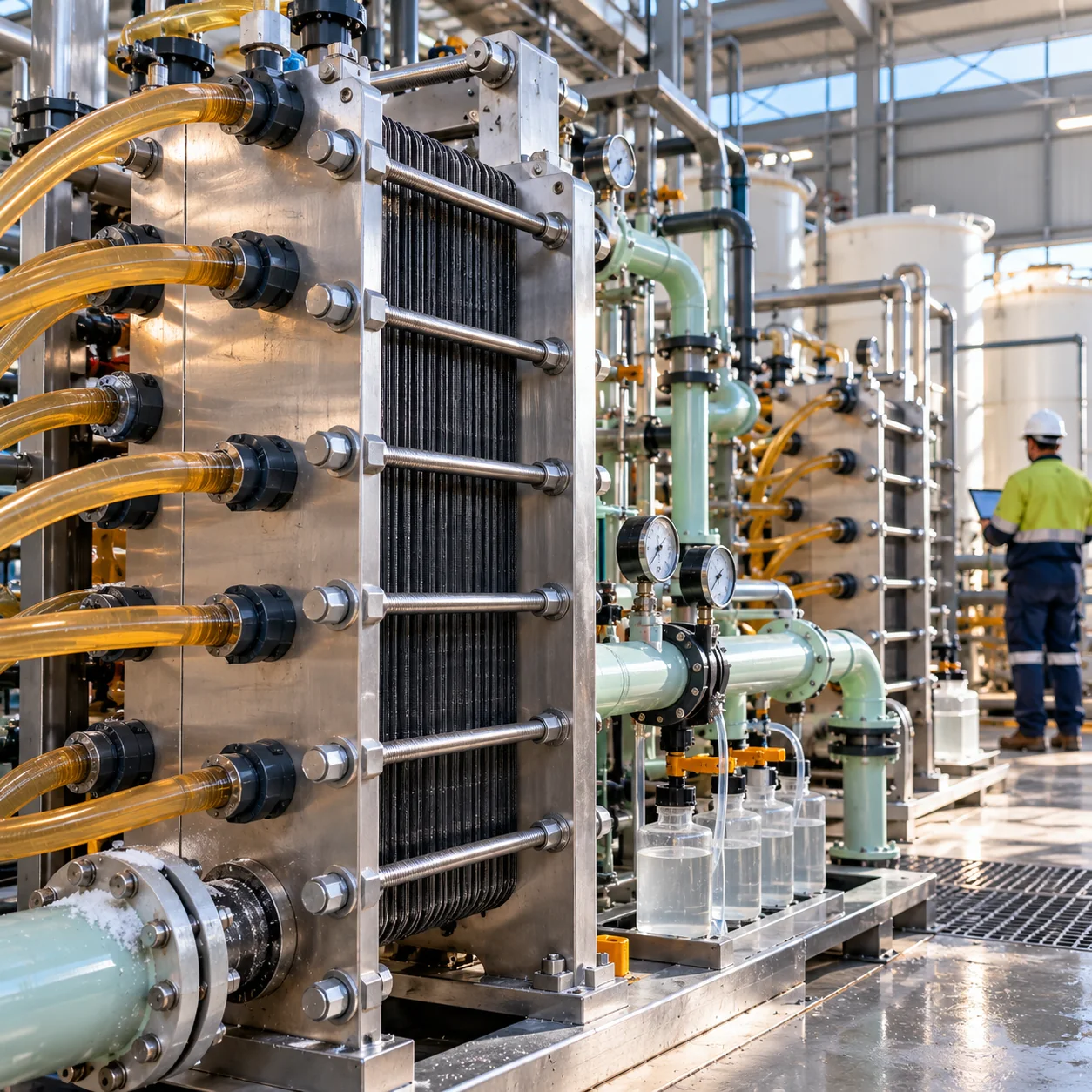
On August 18, Captura and ElectraLith announced a strategic partnership to commercialise ElectraLith’s direct lithium extraction and refining process, known as DLE-R. ElectraLith will build Captura’s bipolar membrane electrodialysis (BMED) stacks into its process, and the agreement includes an initial five-year procurement commitment for those stacks.
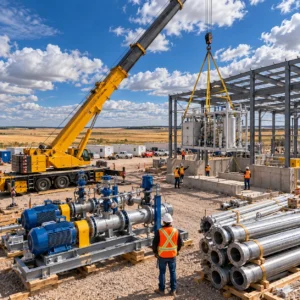
The stacks were procured in June 2026 for two commercial-scale DLE-R pilot plants, both expected to be commissioned in early 2027. ElectraLith expects multiple commercial deployments across Chile, Argentina, Australia and the United States by 2028.
The industry has spent years proving that lithium can be pulled out of brine. The harder question now is what happens after extraction, and this partnership goes straight at that step.
Refining Is Where DLE Projects Win or Stall
Most DLE flowsheets do one job well: they selectively capture lithium from brine and reject most of everything else. What comes out is usually a lithium chloride or sulphate solution. It still has to be concentrated, purified and converted into battery-grade hydroxide or carbonate, a stage that usually takes reagents, water and separate refining capacity.
ElectraLith wants to collapse those steps. The company describes DLE-R as an electrochemical process that produces “99.5%-plus pure battery-grade lithium hydroxide or carbonate” in a single, modular step. It says the process requires no water or chemicals and runs entirely on renewable energy.
ElectraLith’s earlier proof-of-concept work described a two-stage design. The first stage uses electrodialysis to extract lithium chloride, and the second converts it into lithium hydroxide. The patented membranes are based on research by Professor Huanting Wang of Monash University, and electrodialysis has been deployed commercially since the 1950s.
That last detail matters.
Lenders and engineering firms are far more comfortable with new chemistry when it runs on a unit operation they already understand.
The Membrane Supplier Becomes a Strategic Partner
BMED uses electricity and specialised membranes to drive separation and conversion, so the stack is central to how DLE-R performs. According to Captura, its platform delivers significantly lower energy consumption and capital cost than conventional BMED systems. Carbon Herald reports that the technology was pioneered at Caltech, is manufactured in Pasadena, California, and offers up to a tenfold performance improvement compared to leading alternatives.
Captura originally developed the platform for direct ocean capture of carbon dioxide. It now sells into direct lithium extraction, desalination and wastewater processing, which gives the stack a manufacturing base wider than any single lithium project.
Both sides gain. ElectraLith ties its scale-up to a manufacturer with its own reasons to keep cutting stack cost. For Captura, Chief Operating Officer Christene Banda called the agreement “an important commercial milestone for Captura,” with ElectraLith becoming the company’s first major customer.
A secure supply of a critical component is easy to overlook, but it is part of what makes a project bankable.
The Investor List Points Toward Oilfield Brine
ElectraLith counts Rio Tinto, Chevron Technology Ventures, Marathon Petroleum Corporation and In-Q-Tel among its backers. Captura’s Series B investors include Equinor Ventures, Aramco Ventures, Hitachi Ventures, Maersk Growth and National Grid Partners.
That is a lot of oil, gas and utility capital behind a lithium refining technology. Equinor already has direct exposure to the sector through Smackover Lithium, its partnership with Standard Lithium in Arkansas.
ElectraLith’s proof-of-concept testing covered salar brines, geothermal oilfield brines and spodumene leach solutions. The company also reported processing a contaminated brine containing less than 60 ppm lithium.
Low-grade, impurity-heavy brine is the reality for most oilfield resources.
Why Prairie Brine Developers Should Pay Attention
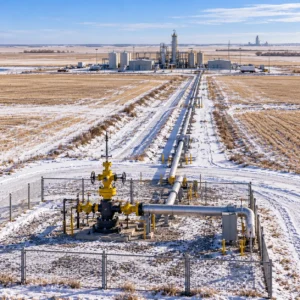
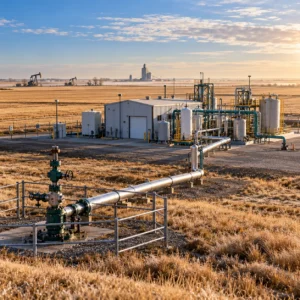
Developers in Alberta and Saskatchewan hold large, dilute brine resources in formations the oil and gas industry has worked for decades. Their pitch combines that subsurface knowledge with DLE. The weak link has been turning eluate into battery-grade product close to the field, rather than shipping intermediates to distant refiners.
If an electrically driven, modular refining step performs as claimed, it changes several parts of that calculation:
- Fewer reagent deliveries to remote prairie well sites
- Lower freshwater draw where water licensing faces close scrutiny
- Power demand that can be matched to grid or renewable supply contracts
- Refining capacity sized to individual pads rather than one central plant
- Battery-grade product shipped directly to North American cell makers
None of this has been proven at commercial scale. The two pilot plants due in early 2027 will be the real test. Canadian developers weighing refining routes should watch three things: energy use per tonne of product, stack life on real brine, and how consistent the product is from batch to batch.
A Pilot Calendar Built Around Performance
The schedule is tight. The stacks were procured in June 2026, the pilots are due to be commissioned in early 2027, and commercial deployments in four countries are targeted for 2028. Captura says it expects additional orders after successful pilot operations, so the pilots decide where the relationship goes next.
That is a sensible structure. Volume follows performance, and neither company has to bet its balance sheet before the data is in.
It also shows how DLE is maturing. Technology developers are no longer selling one breakthrough. They are building supply chains of specialist components, each with its own manufacturer and its own cost curve, and the developers who line those up early will move faster when capital becomes available.
Extraction proved that lithium could come out of brine. Refining at the wellhead will decide who gets paid for it.